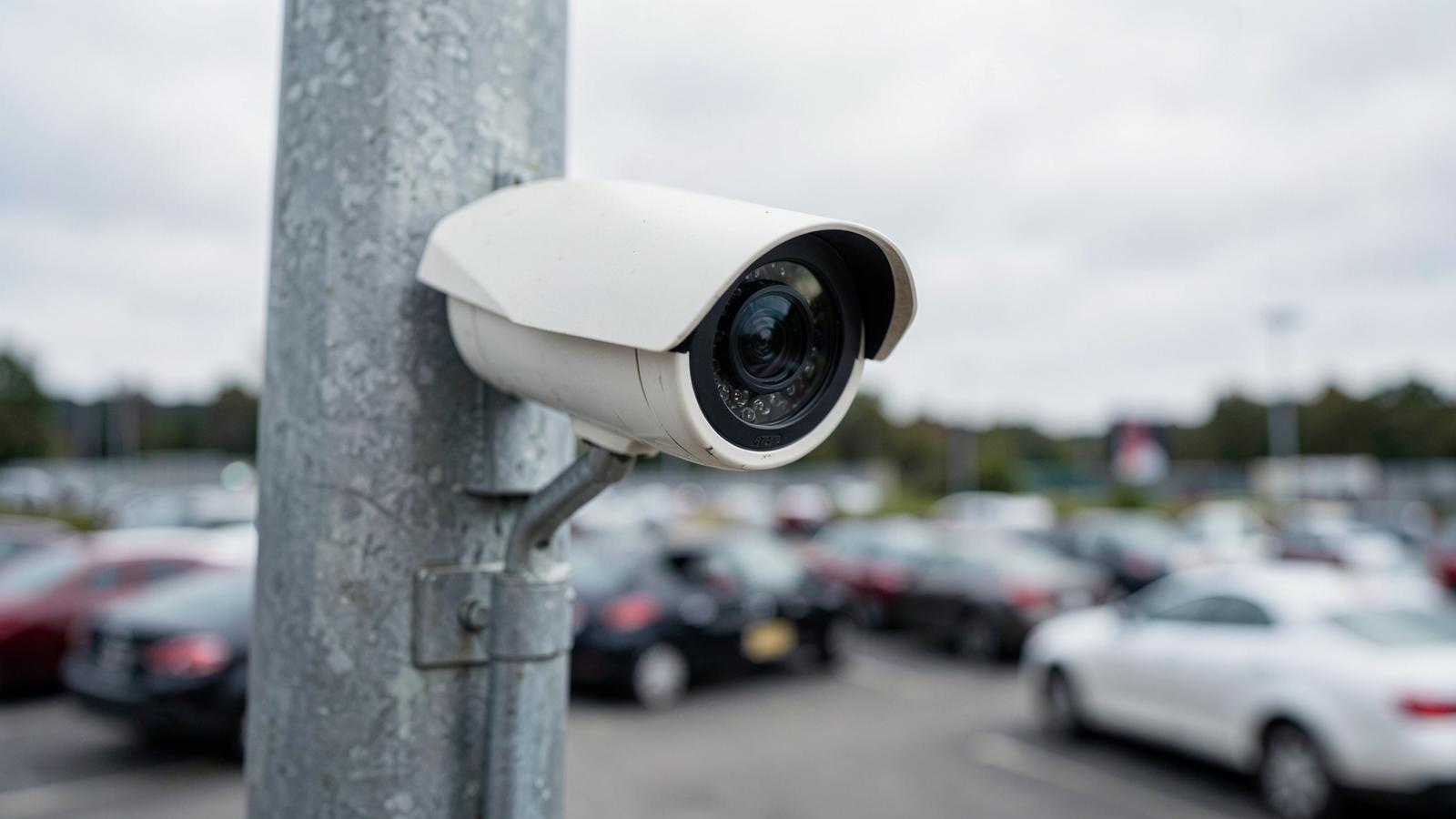
Recognition accuracy is decided on the pole, not in the software. A well-placed mid-range camera beats an expensive one pointed at the wrong angle, and most disappointing installations come down to four choices made before anything was switched on.
Angle and distance beat megapixels
A plate should fill enough of the frame to be read, and the camera should look at it close to straight on. Steep downward angles and sharp side angles distort characters far more than a lower resolution does. As a rule, keep the horizontal angle under about 30 degrees and mount high enough that headlights do not shine directly into the lens.
Match the lens to the distance. A wide lens covering a whole yard gives you a nice overview and unreadable plates; a narrower lens aimed at the lane where vehicles actually pass gives you sessions.
Night, weather and the shutter
Most misreads happen after dark. Infrared illumination and a fast shutter freeze the plate instead of smearing it, and a retroreflective plate under IR reads well even when the rest of the scene is black. Cameras marketed for general surveillance often default to slow shutters that look pretty and read badly.
In Baltic and Nordic conditions, plan for salt, spray and snow: housings rated for the climate, a heater where icing is likely, and a mounting position that keeps the lens out of the worst of the road spray.
- Straight-on view of the lane, not a panoramic view of the site
- IR illumination plus a shutter fast enough for moving vehicles
- Separate overview cameras if you also want context images
- Cabling and power planned before the first bracket is drilled
Use what is already on site
Many lots already run IP cameras for security. If they stream over standard protocols and sit in a usable position, they can feed a parking system directly — the cheapest camera is the one already installed.
Where there is no camera, or no mains power, the site needs designing rather than shopping. Remote lots can run on autonomous power, and the cost of getting electricity to a pole is often the real budget line, not the camera itself.