Plate Recognizer is a well-known number plate reading engine: you send it an image or point it at a camera stream, and it returns the plate text. It is a good place to start if you only need recognition. Running a parking site needs more than a plate string, and that is where the comparison gets interesting.
What Plate Recognizer actually does
It is an ALPR engine offered in two shapes: a cloud or on-premise API that reads single images, and a stream agent that watches an RTSP camera feed and reports plates as vehicles pass. Both return the plate text, a confidence score, a region guess and the bounding box.
Pricing is based on recognition volume, and on-premise licences let you keep images inside your own network. The engine is strong on Baltic, Nordic and most European plate formats, and it runs on modest hardware, including small edge boxes next to the camera.
Setting it up on a lot, step by step
The setup work is mostly camera work, not software work. The engine can only read what the lens delivers.
- Create an account and get an API token, then decide cloud or on-premise
- Point a camera straight down the lane, under roughly a 30 degree horizontal angle
- Use a fast shutter and infrared illumination so plates freeze instead of smearing at night
- Test with real traffic for a few days and record the misreads, not just the hits
- For live lanes, install the stream agent on a small PC on site and feed it the RTSP URL
- Send the results somewhere — a webhook into your own software, or a spreadsheet for a pilot
Where the engine stops and the system starts
A plate read is one event. A paid parking site needs the rest: pairing an entry read with an exit read into a session, deciding the tariff, handling permits and residents, taking payment, chasing the ones who do not pay, keeping the photo evidence, and giving the operator a dashboard that answers questions at the end of the month.
Teams that start with a raw recognition API usually end up building that themselves — matching logic across multiple entrances, grace periods, misread correction, payment flows, refunds, enforcement paperwork, GDPR retention rules. It is several months of work before the first euro is collected.
How Geparkt compares
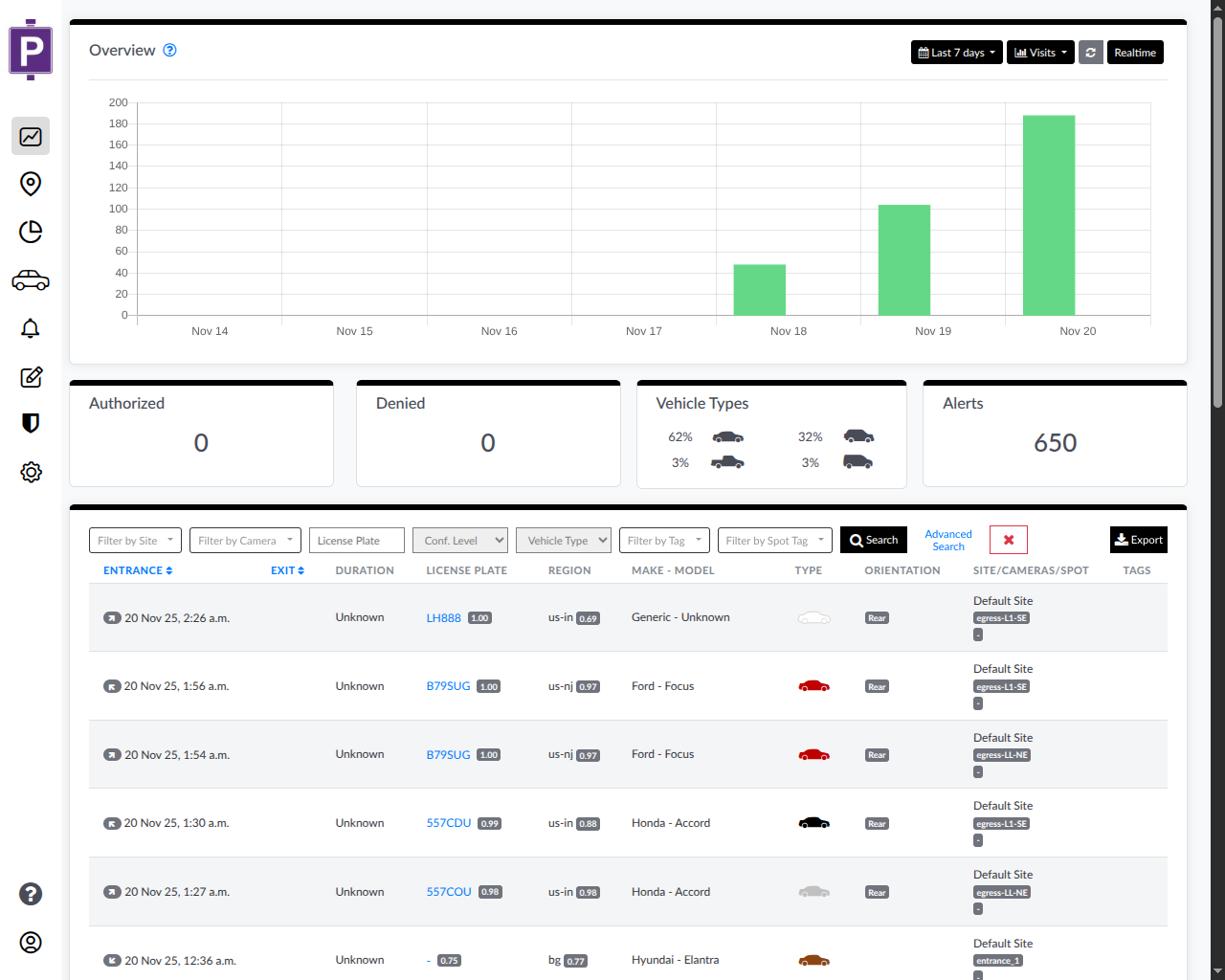
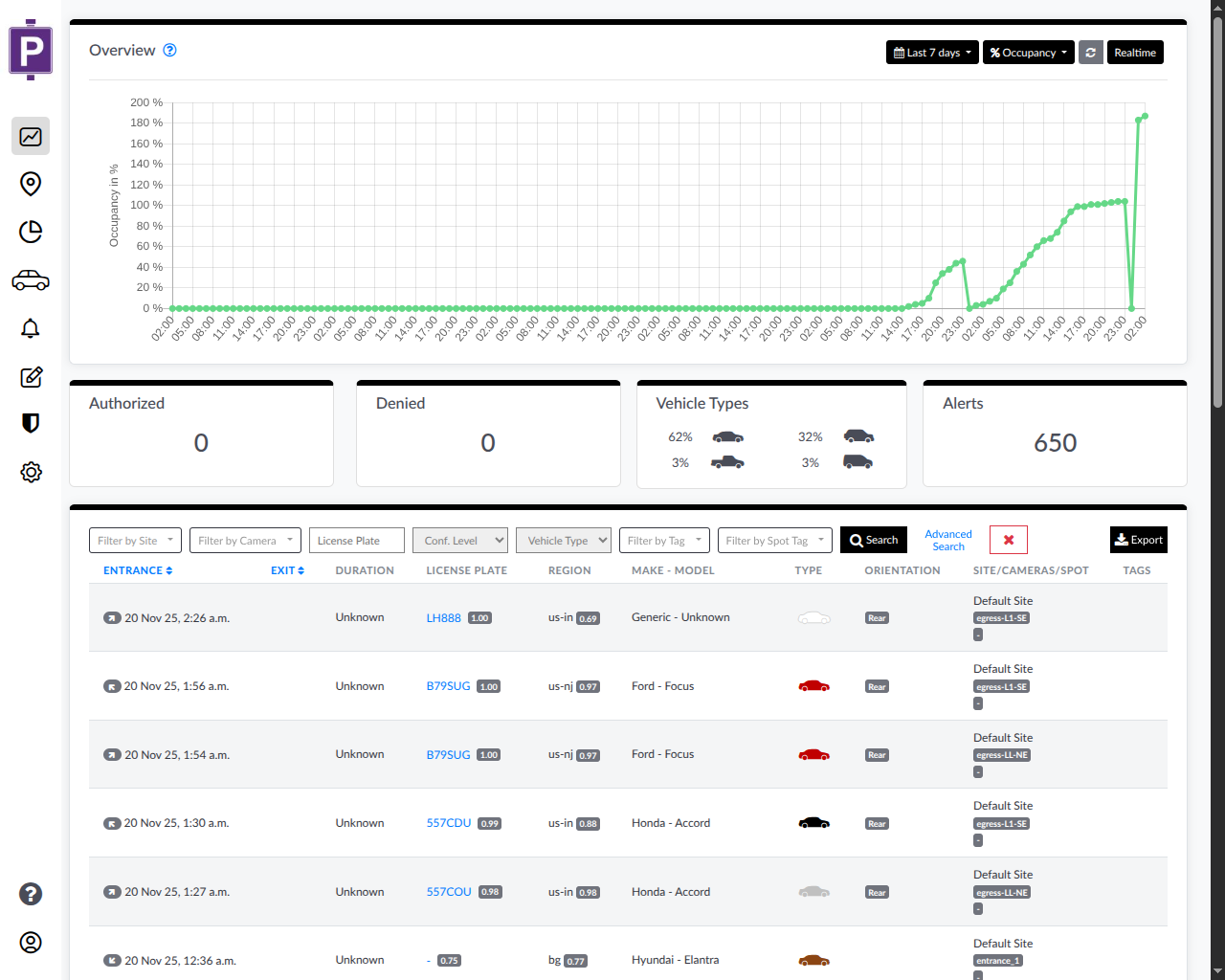
Geparkt is the whole operation, not just the reading step. Cameras feed recognition, recognition feeds sessions, sessions feed tariffs, payment, evidence and enforcement, and the operator sees all of it in one place.
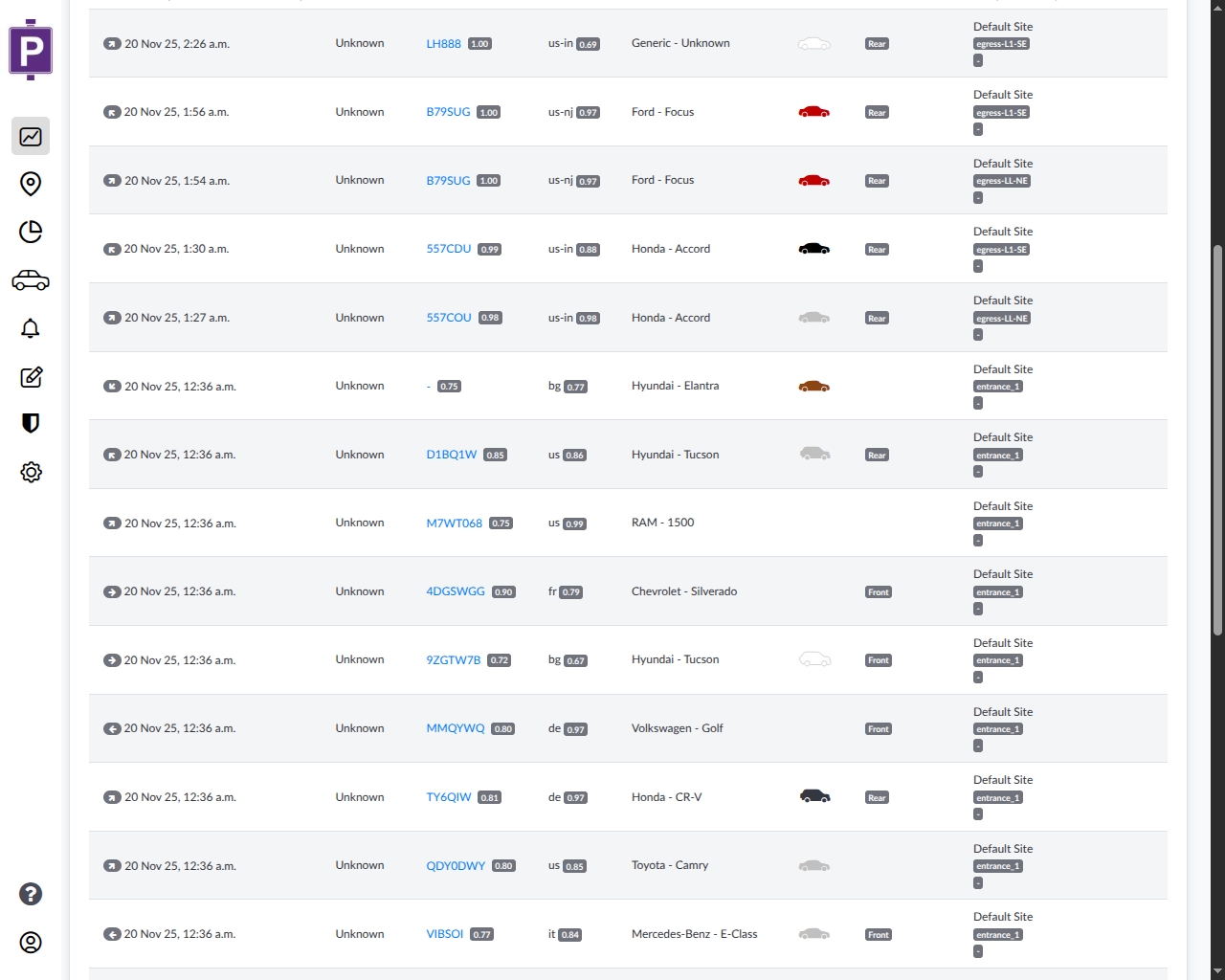
- Sessions, not events — entries and exits are paired across multiple entrances and exits on the same site
- Multi-camera lots supported, including street-side and open sites with no barriers
- Tariffs, permits, residents, free periods and whitelists configured per site, not coded by you
- Payments without barriers, plus debt and fine collection when drivers do not pay
- Photo evidence kept with every session, ready for disputes
- Works with the IP cameras already on site over standard protocols, or with new hardware through our partners
- Runs as a managed service or self-hosted in Docker on your own infrastructure
- AI assistant and operator dashboard on top, so the site answers questions instead of exporting CSVs
Which one should you pick
If you are a developer who needs plate text inside an existing product, an ALPR API is exactly the right tool, and Plate Recognizer is a solid one. If you own or manage parking and want revenue, evidence and enforcement without building software, the engine alone leaves most of the work on your desk.
It is not either-or, either. Geparkt can sit on top of recognition you already run, so an existing ALPR investment is not wasted when you move to a full parking system.