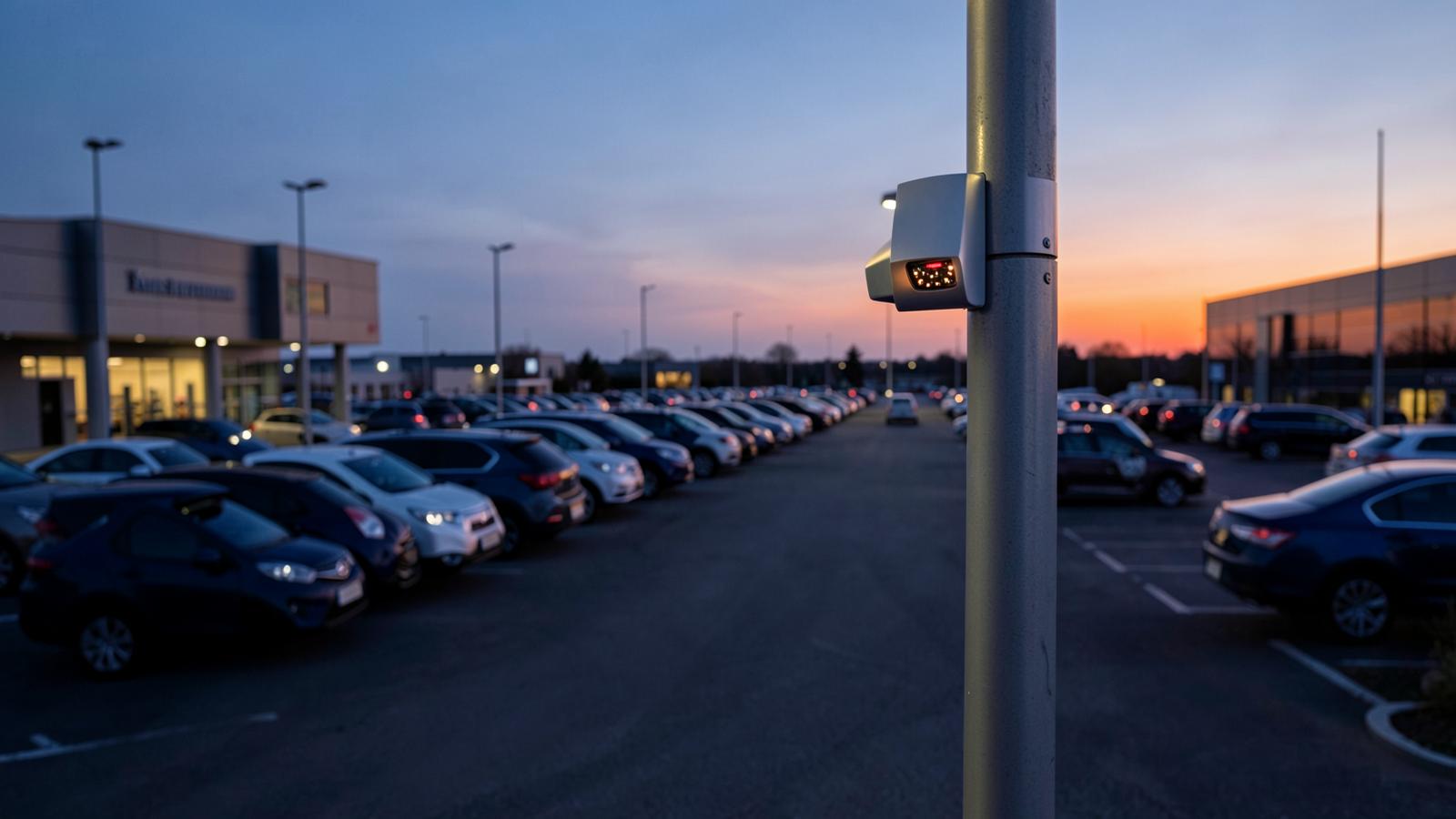
Most parking problems are not parking problems. They are data problems: nobody knows exactly which vehicle arrived, when it left, and whether the money for that stay ever landed. A camera-based system answers those three questions automatically, and everything else — pricing, enforcement, reporting — is built on top of the answers.
Step one — the vehicle is seen, not scanned
A camera watching the entrance captures a frame the moment a vehicle crosses into the zone. Recognition software reads the number plate from that frame and records the plate, the timestamp, the camera and a confidence score. No ticket, no barrier, no app is required for the session to start.
Because the session opens from an image rather than a button press, the record carries its own evidence. If anyone later disputes a stay, the frame that opened it can be produced alongside the plate and the time.
Step two — the session stays open until the vehicle leaves
While the vehicle is inside, the system holds one open session for that plate. Additional cameras covering rows, exits or street-side bays keep confirming presence, which matters on lots where there is no single gate to pass through.
The exit frame closes the session and fixes the duration. Duration plus the tariff for that zone gives the amount owed, calculated the same way every time and without an attendant.
- One open session per plate, no matter how many cameras see the vehicle
- Zones drawn as polygons, so a single lot can have different rules per area
- Whitelists for tenants, staff and permit holders that never generate a charge
- Every state change written to an audit trail with its source frame
Step three — the money and the exceptions
Payment can happen while the vehicle is parked or after it leaves. Sessions that are paid simply close. Sessions that are not become exceptions — overstays, unpaid stays, vehicles in restricted bays — and each one already has the evidence attached that a reminder, a fine or a collection process needs.
That is the practical difference between a camera on a pole and a parking system. The camera produces pictures; the system produces sessions, invoices and a defensible record of what happened on the site.